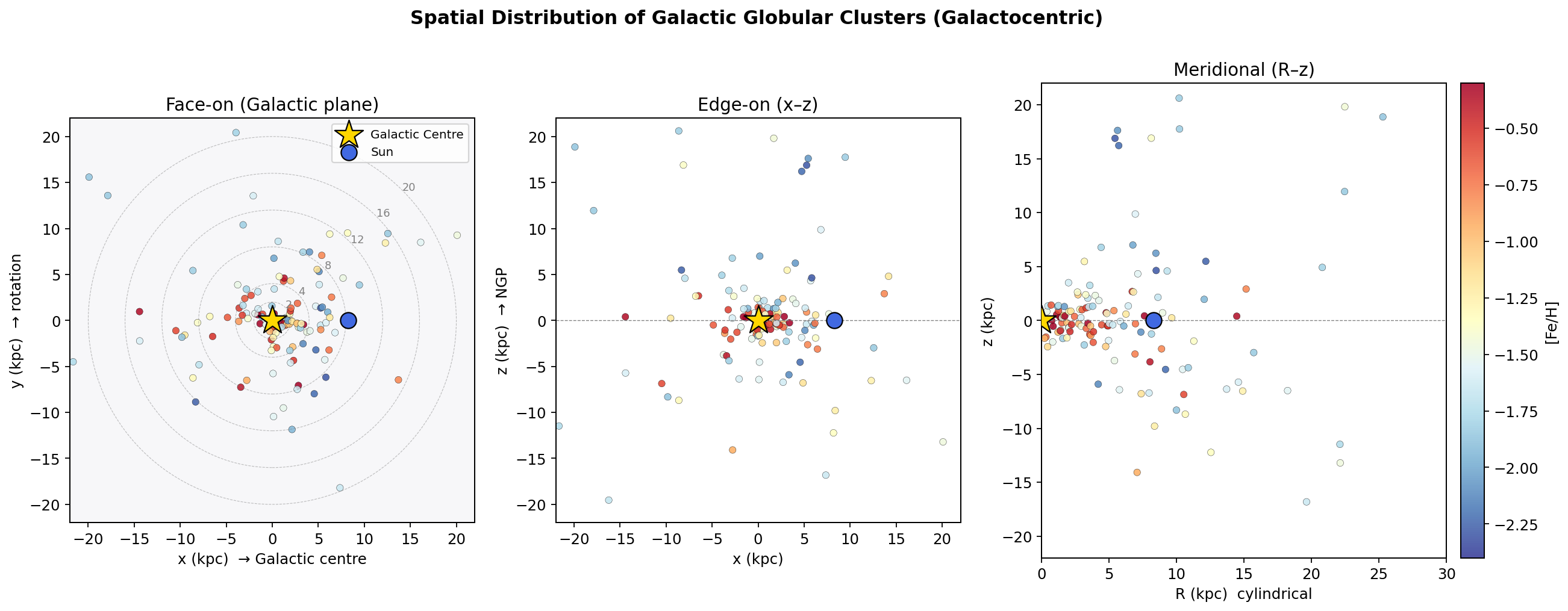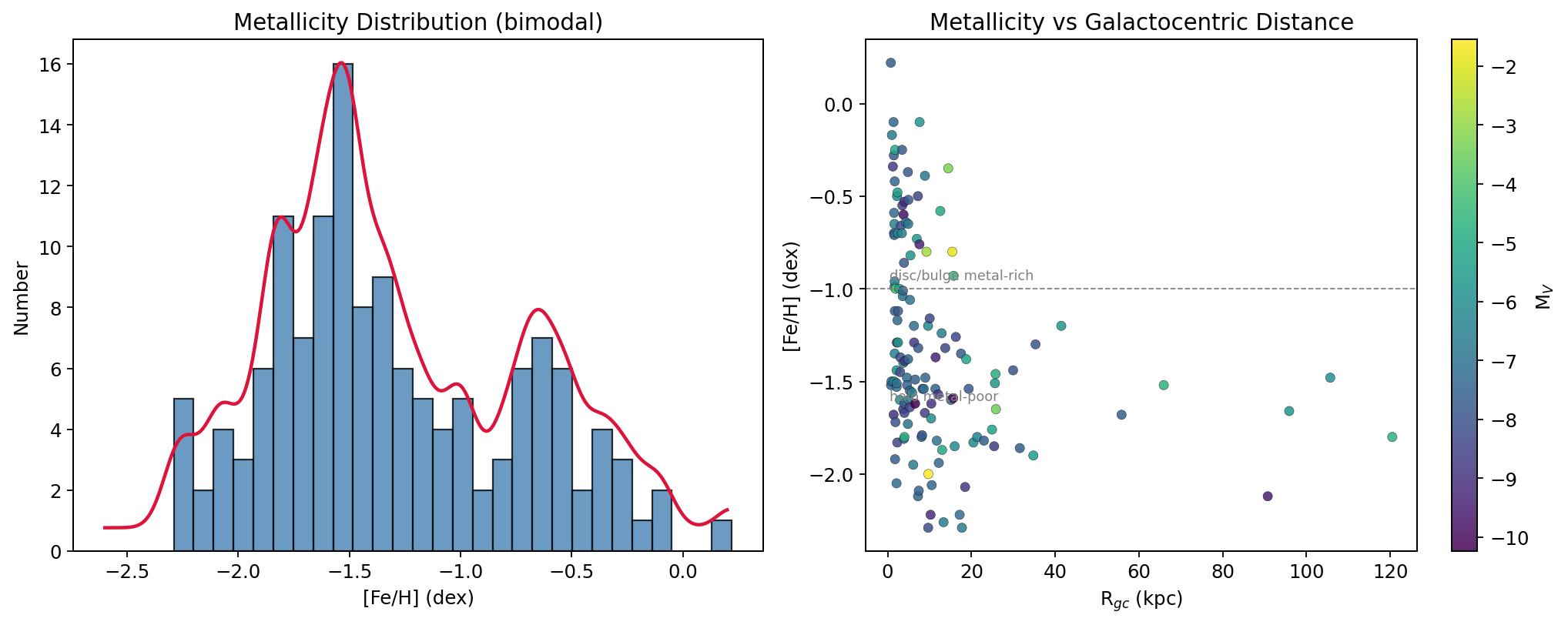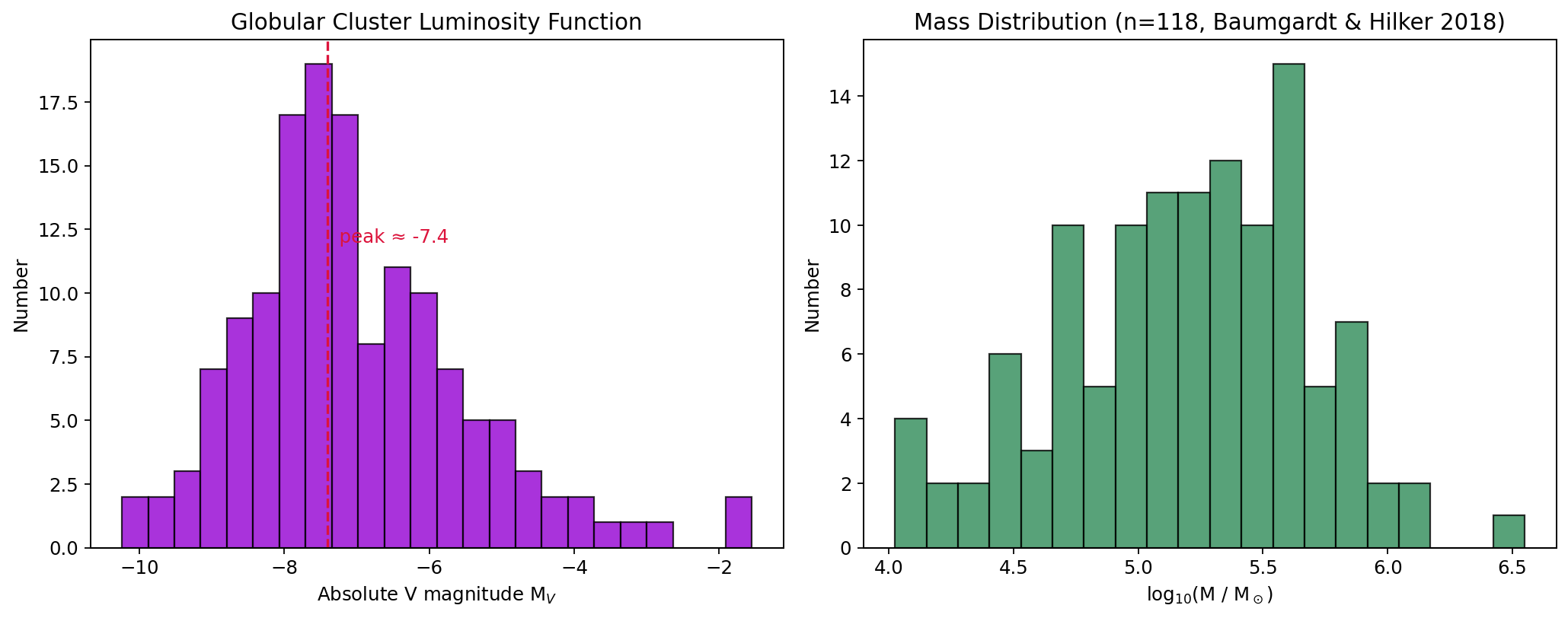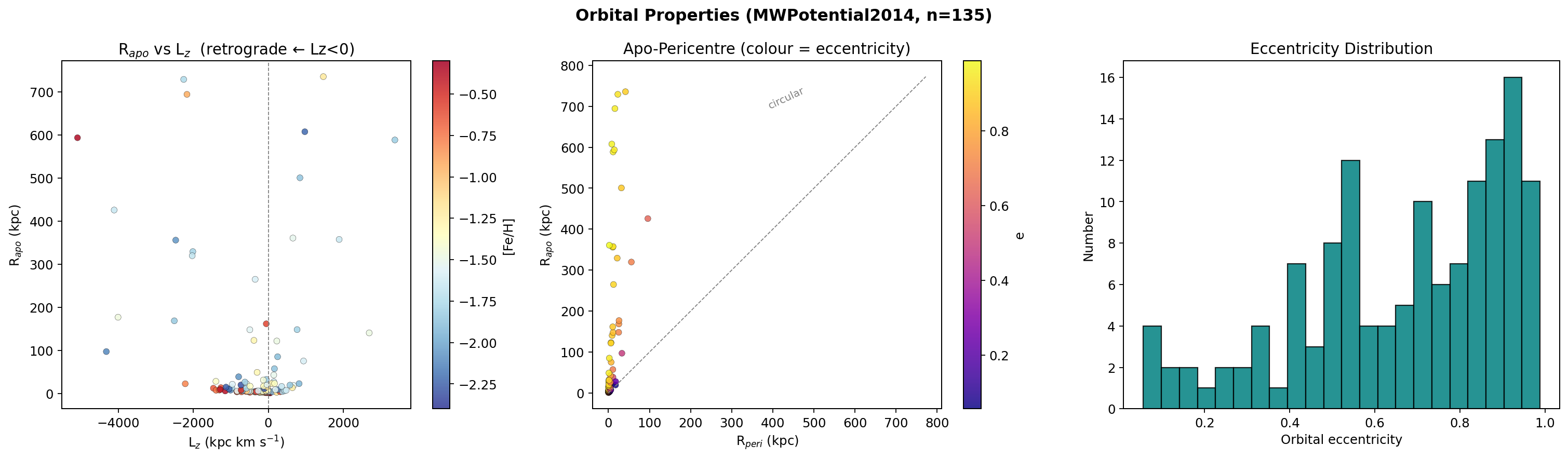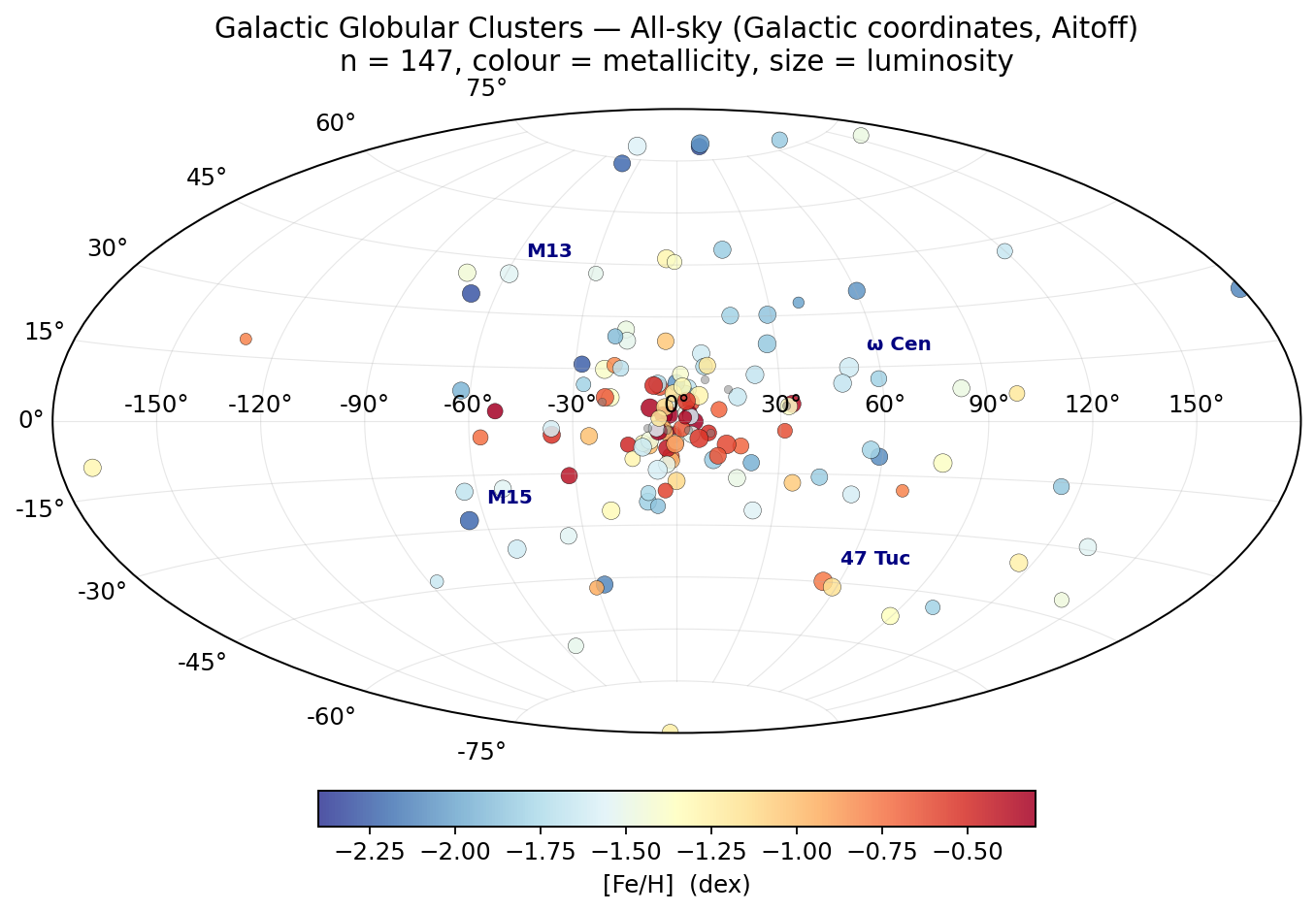
One catalog, 176 ancient star cities, three equal ways in. The unified atlas cross-matches five surveys, integrates 135 orbits against MWPotential2014, tracks 124 stellar streams, and models the spiral arms & bar — served through a 3D explorer, a plotting bench, and a knowledge base. 一份星表,176 座古老星城,三种平等的进入方式。本图谱交叉匹配五份巡天数据,在 MWPotential2014 势场下积分 135 条轨道,追踪 124 条恒星流,并建模旋臂与中央棒——通过 3D 浏览器、制图台与知识库呈现。
The dome is for roaming the sky, the bench for drawing figures, the library for reading the literature — three rooms, each with its own duty, none above another. 圆顶用来漫游天空,测量台用来绘制图件,书房用来研读文献——三个房间各司其职,不分主次。
Strung together, they trace the full course of studying a cluster system: first see it, then measure it, at last understand it. 串起来看,它们恰好是研究一群星团的完整过程:先看见,再量清,后读懂。
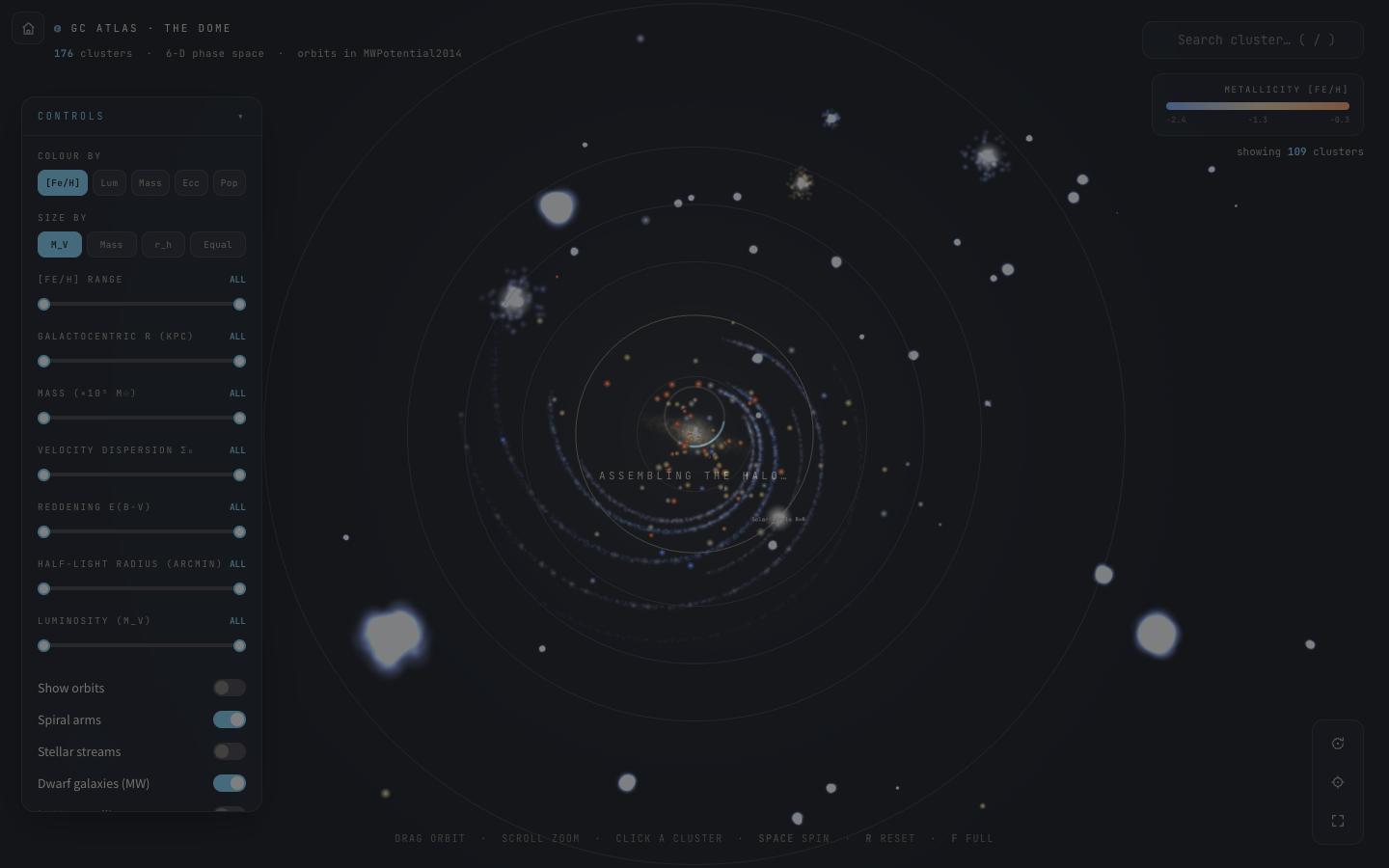
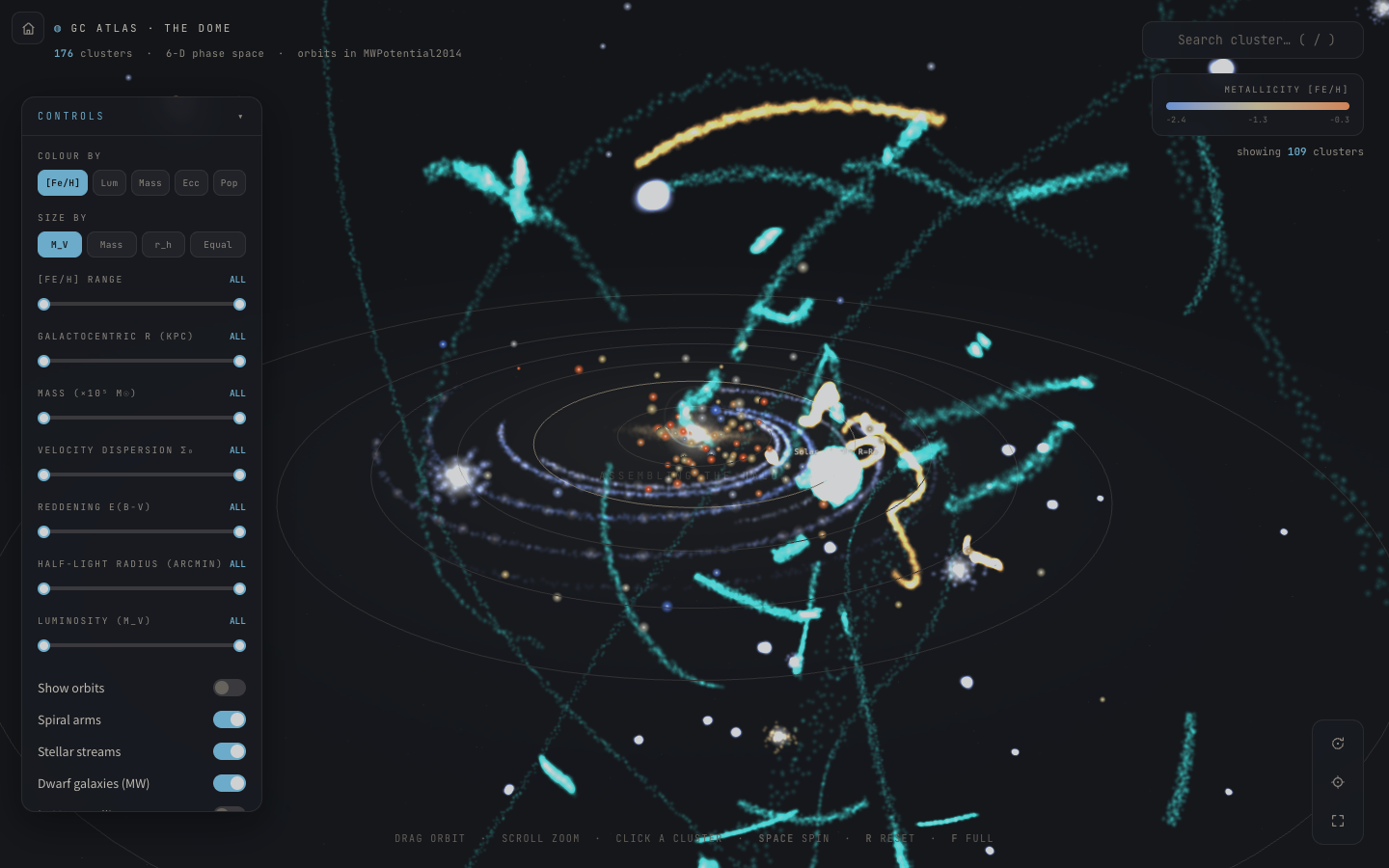
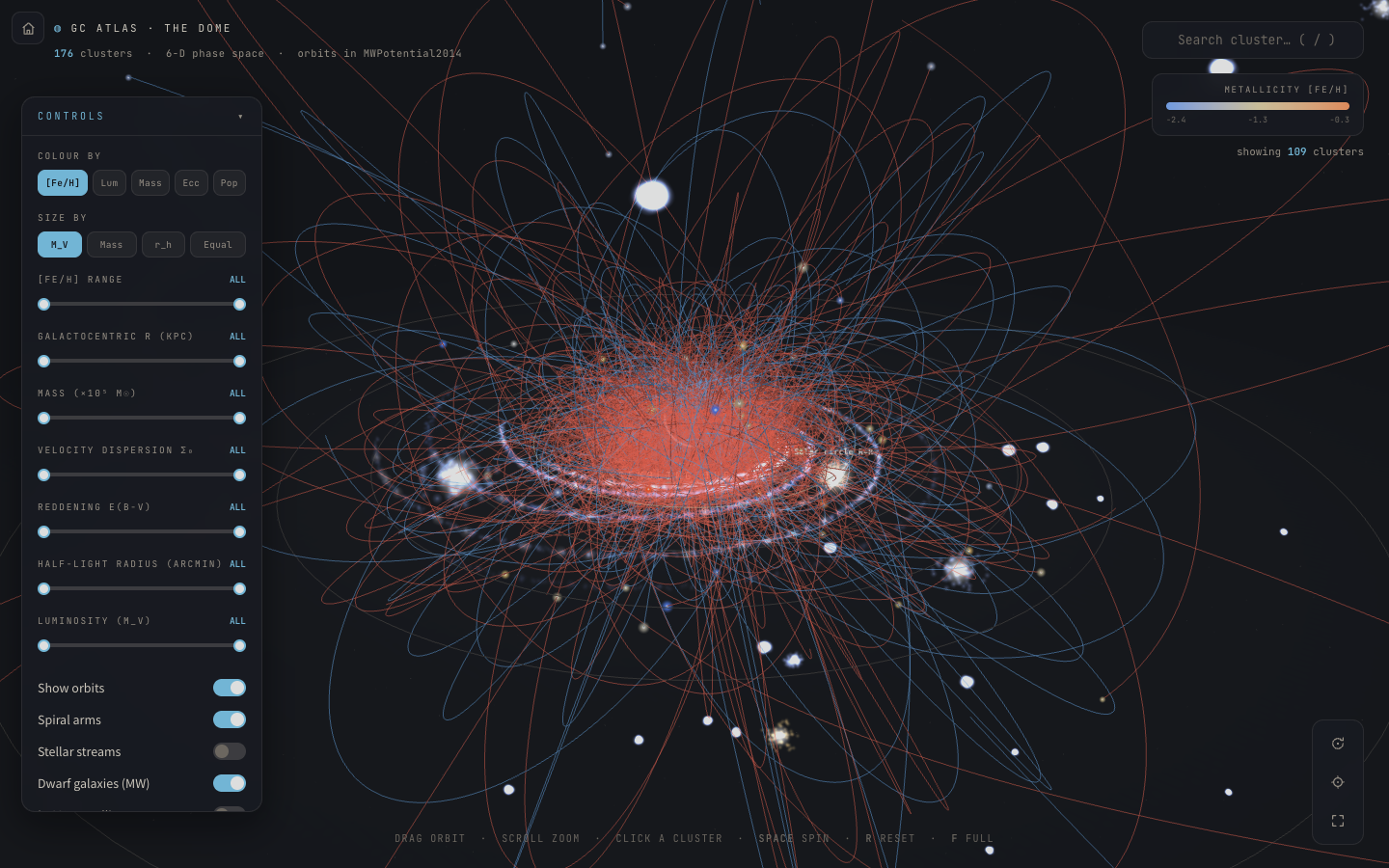
Roam the Milky Way in three dimensions — the spatial distribution of 176 clusters, their integrated orbits, and 124 stellar streams, with real-time interaction. 在银河系三维坐标系中自由漫游——查看 176 个球状星团的空间分布、积分轨道与 124 条恒星流,支持实时交互。
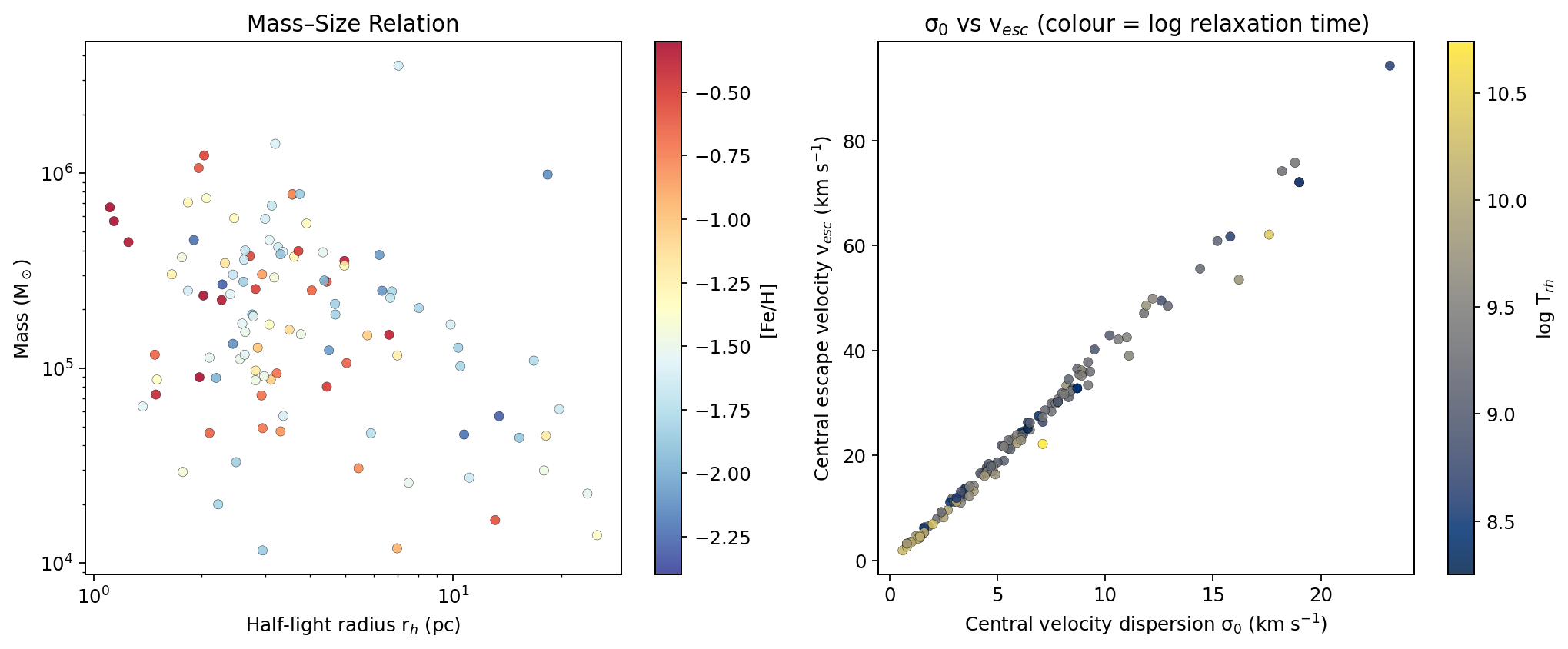
Enter the dome进入圆顶→Turn the catalog into ApJ-style scientific figures — CMDs, temperature distributions, abundance profiles — with parametric analysis and vector export. 把星表绘成 ApJ 风格的科学图件——CMD、色温分布、丰度剖面——支持参数化分析与矢量导出。
Take the bench走上测量台→Sit down with the subject itself — cluster catalogs and classification, dynamical evolution models, and guided key literature, written to be read. 坐下来阅读研究对象本身——星团编目与分类、动力学演化模型、关键文献导读,为研读而写。
Open the library走进书房→176 Milky Way globular clusters, cross-identified and merged from four authoritative catalogs. Names are normalized (Messier/common aliases → Harris primary key) and matched by coordinates (3″ tolerance); multi-source fields are fused by precision priority. 135 clusters have full 6-D phase space (position + proper motion + radial velocity). 176 个银河系球状星团,经交叉比对并从四份权威星表合并而成。名称已规范化(梅西耶/常用别名 → Harris 主键),并按坐标(3″ 容差)匹配;多源字段按精度优先级融合。其中 135 个星团具备完整的 6 维相空间(位置 + 自行 + 视向速度)。
| Field coverage字段覆盖 | Count数量 |
|---|---|
| Distance距离 | 170 |
| Proper motion (Gaia EDR3)自行(Gaia EDR3) | 170 |
| Mass质量 | 118 |
| Metallicity [Fe/H]金属丰度 [Fe/H] | 139 |
| Radial velocity视向速度 | 141 |
| Full 6-D phase space完整 6 维相空间 | 135 |
| Spot-check clusters抽样核对星团 | Distance距离 | [Fe/H] | ecc偏心率 |
|---|---|---|---|
| 47 Tuc (NGC 104) | 4.41 kpc | −0.76 | 0.12 |
| ω Cen (NGC 5139) | 5.20 kpc | −1.62 | 0.69 |
| M13 (NGC 6205) | 6.60 kpc | −1.54 | 0.81 |
Every catalog was verified against its official CDS VizieR identifier and is cited with its original reference. Click any card to open the source. Data remain the property of their respective authors/institutions and are redistributed here for research and educational use. 每份星表均经官方 CDS VizieR 编号核验,并附原始文献引用。点击任意卡片可打开来源。数据归各自作者/机构所有,此处仅用于研究与教育用途再分发。
| Check核对项 | Result结果 | Status状态 |
|---|---|---|
| Row counts vs VizieR行数 vs VizieR | 147 / 170 / 112 / 10978 | ✓ match |
| Coordinate consistency (Harris vs Gaia EDR3)坐标一致性(Harris vs Gaia EDR3) | median offset 0.048′ (≈3″) | ✓ reliable |
| Circular velocity at the Sun太阳处圆周速度 | 238.0 km/s | ✓ MWPotential2014 |
| 47 Tuc Galactic coordinates47 Tuc 银道坐标 | l=305.89°, b=−44.89° | ✓ lit. 305.90, −44.89 |
| Orbit start vs catalog position轨道起点 vs 星表位置 | offset ≈ 0.02 kpc | ✓ same frame |
| Online 3D app (headless test)在线 3D 应用(无头测试) | 176 clusters / 124 streams / 0 JS errors / 120 fps | ✓ pass |


The pipeline is fully scripted and the catalog ships with the repo — rerun every step from raw VizieR tables to web data. If the atlas supports your work, cite the project and acknowledge the underlying surveys listed under Data Foundation. 整条数据管线均有脚本、星表随仓库发布——从 VizieR 原始表到网页数据可一步步复现。若本图谱对你的工作有帮助,请引用本项目,并向 数据基础 中列出的底层巡天数据致谢。
# Clone the repo git clone git@github.com:jianxing-chen/globular-cluster-atlas.git cd globular-cluster-atlas # Open the 3D app (zero install) open viz/index.html # macOS # start viz\index.html # Windows # xdg-open viz/index.html# Linux
# Re-run the data pipeline (optional) cd scripts python3 download_catalogs.py # 1 fetch from VizieR python3 parse_and_validate.py # 2 parse + validate python3 build_master.py # 3 merge master catalog python3 integrate_orbits.py # 4 orbit integration python3 process_streams.py # 5 stellar streams python3 make_figures.py # 6 static figures python3 export_viz_data.py # 7 bundle web data
# APA
Chen, J. (2026). Milky Way Globular Cluster Atlas [Computer software].
Retrieved from https://github.com/jianxing-chen/globular-cluster-atlas
# BibTeX
@software{chen2026gcatlas,
author = {Chen, Jianxing},
title = {Milky Way Globular Cluster Atlas},
year = {2026},
url = {https://github.com/jianxing-chen/globular-cluster-atlas},
note = {Interactive 3D explorer + APJ-style figure workbench}
}
# Suggested acknowledgement text
This work made use of the Milky Way Globular Cluster Atlas (Chen 2026,
https://github.com/jianxing-chen/globular-cluster-atlas). The atlas aggregates
catalogues from CDS VizieR (Harris 1996/2010; Vasiliev & Baumgardt 2021;
Baumgardt & Hilker 2018; Bica et al. 2019) and stellar-stream tracks from the
galstreams library (Mateu 2023). This work has made use of data from the
European Space Agency (ESA) mission Gaia, processed by the Gaia Data
Processing and Analysis Consortium (DPAC).